
The Indian indices also offer one of the lowest dividend yields.

Industrial production in November was expected to grow 1.0 per cent from a year earlier, after shrinking 1.8 per cent in October, according to the median consensus of 20 economists.

Only luxury and 'sin' items could be left in highest slab. 12 and 18 per cent slabs could be merged in the future

Whatever its apprehensions and concerns about the regime of the Rajapaksa clan, India must be ready with unconditional assistance when Colombo asks for it. Because it will, observes Aditi Phadnis.

The growth of key infrastructure industries slowed down to 2.3 per cent in December 2008 from 3.2 per cent a year-ago, mainly on account of drop in output of steel and crude oil.

Ajit Mishra, vice president, Research, Religare Broking, answers your queries.
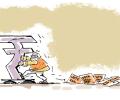
'Since the growth is not fast enough to provide jobs for the young, the fallout will be political and social,' warns T N Ninan.

Despite the recent slowdown, e-commerce tops the projected average salary hike list

These sectors are seeing a marked slowdown, as consumers are postponing purchase decisions amid uncertainty and severe cash crunch, report Ram Prasad Sahu, Sheetal Agarwal & Ujjval Jauhari from Mumbai.
The growth in six core industries - crude oil, petroleum refinery products, coal, electricity, cement and finished carbon steel - contracted also for the April-September period to 3.9 per cent from 6.9 per cent in the first half of the previous year. The infrastructure industries have a weight of 26.7 per cent in the overall index of industrial production.

'We don't expect any immediate impact on salaried jobs.'

What is driving the digital-first approach of traditional, legacy brands? Apart from the growing adoption of the internet in the country, brands are drawn to the agility of the medium.
With less than a month to go for the two mega television shows - Kya Aap Paanchvi Pass Se Tez Hai of Star Plus and the BCCI-promoted Indian Premier League on Sony - companies have lined up in right earnest for sponsorship deals with the broadcasters. Star Plus has signed on a string of advertisers for the Shah Rukh Khan-anchored show. These include confectionery brand Halls, Pidilite Industries, Havells India, L'Oreal India, Tata Sky, Parle Products etc

Ahluwalia said the government has taken steps to push the infrastructure sector and there are signs of improvement in the core sector production performance of steel, power, coal and cement during July and August.

Increased price control over branded generic medicines has affected its profitability
Pulled down by the sluggish performance of petroleum and electricity sector, growth of India's six core industries slowed down to 3.6 per cent in the first month of the current fiscal as against 5.9 per cent a year ago. The six core infrastructure industries - crude oil, petroleum refinery products, coal, electricity, cement and finished carbon steel - had registered a 9.6 per cent growth in the preceding month of March

'Investors should be careful in getting carried away; although a reversal of IPO frenzy this time is taking longer than in the past.'
The Cabinet Committee on Prices is likely to ban exports of steel and steel products. The other measures being considered include levying an ad-valorem duty on iron ore exports and bringing down the excise duty on steel to 8% from the current level of 14%. Steel ministry is considering many steps to bring down steel prices. Also, reimbursement of service tax on foreign agents used by exporters will be further increased. Ban on exports is not the only solution, experts say.
Poor performance in almost all core areas of the infrastructure sector, including crude oil, power, cement and coal has led to a steep fall in six core infrastructure industries to 4.2 per cent in January, against 8.3 per cent in the corresponding period last year.During April-January 2007-08, the growth rate of these core industries declined to 5.5 per cent against 8.9 per cent during the same period last fiscal.
Core infrastructure industries of crude petroleum, petroleum refinery products, coal, electricity, cement and finished steel all registered a decline in growth.

Power sector accounts for 70% of total industrial water use; steel, paper also make it to the list.

If the government delivers its election promises, then activity in the industry should increase.

This is the project to turn municipal and agri-waste into fuel sources like diesel, jet fuel, naptha and petroleum. It is called IH2.

The new national income numbers produced by the Central Statistics Office (CSO) have elicited two kinds of reaction.
The index of six infrastructure industries in January registered a year-on-year growth rate of 8.74 per cent, as against 8.2 per cent in the same month last year.

The Constitution amendment bill for roll-out of GST is pending in Rajya Sabha for a long time.
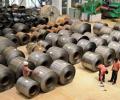
Production at factories, mines and utilities likely rose an annual 2.4 per cent in August, up from July's 0.5 per cent rise, according to the survey of 26 economists.
After falling for two weeks in a row, inflation once again firmed up marginally to 6.10 per cent for the week ended February 24 against 6.05 a week ago.

he 2014 electoral verdict has bolstered investor confidence and raised hopes of economic revival, apex banks says in its monthly Bulletin

Industrial production was seen growing 1.8 per cent from a year earlier in July, slower than June's 3.4 per cent increase, according to the median consensus in a poll of 31 economists.

Finance Minister Arun Jaitley is expected to present the Budget for 2014-15 in July.

The technical report of the NSSO has generated controversy following its observation that as much as 36 per cent units forming part of MCA-21 database, used in computing GDP, could not be either identifiable or traceable in the field.

Ajit Mishra, vice president, Research, Religare Broking, answers your queries.
Sri Lanka has slashed tariffs by up to 70 per cent on India goods such as cement, petroleum products and motorcycles under a bilateral trade deal.

The corporate sector took production cuts, conducted inventory management and reduced staff to meet challenges following the govt's note ban decision

With inflation down, the government's twin deficits are largely under control.

Almost 53 per cent of the companies covered by the survey felt that high cost of credit was creating a problem for India Inc.
